



The best designer resume examples do more than showcase creative work. They present your skills, experience, and achievements in a clear, professional format that employers want to see. A well-written design resume is easy to read, ATS-friendly, and tailored to your target role. Whether you're starting your design career or applying for a senior position, these examples can help you create a resume that stands out and increases your chances of getting interviews.
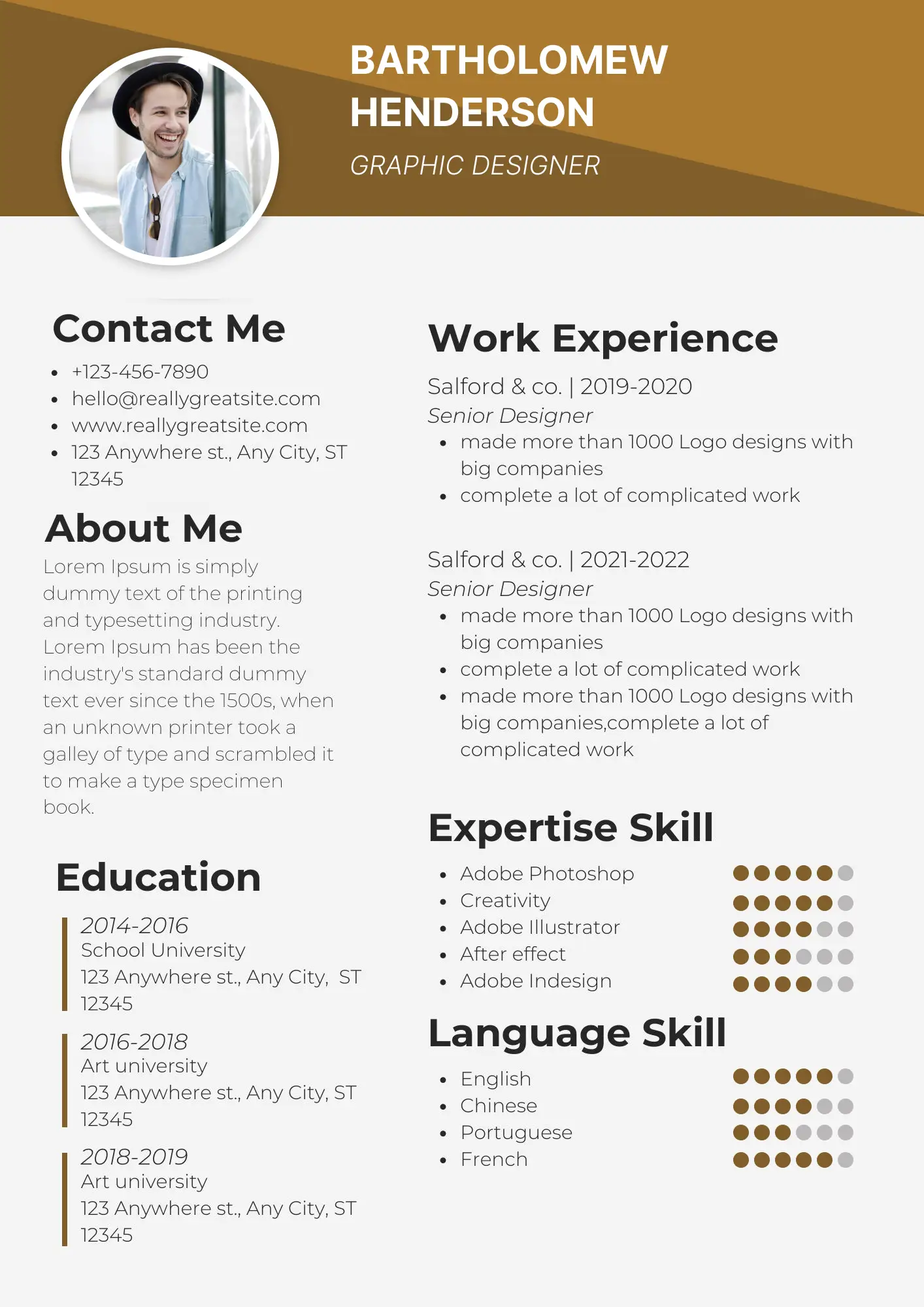

Finding the right balance between creativity and professionalism can be challenging. Employers want to see your artistic abilities, but they also expect a resume that's easy to read and ATS-friendly.
Our ATS resume examples help you create a resume that meets both expectations.
Instead of simply listing responsibilities, learn how to present measurable accomplishments, successful projects, awards, and client work that demonstrate your impact.
Many companies use Applicant Tracking Systems before a hiring manager reviews applications. Our examples use clean formatting that improves readability while helping your resume pass ATS screening.
Every creative role has different expectations. Our examples are tailored for careers including:
A great design resume is easy to read and shows your creativity. It should highlight your skills, experience, and achievements without looking cluttered.
Our resume examples show you exactly what employers want to see.
Start with a short summary that introduces you. Mention your experience, creative skills, and the value you can bring to the role.
List the design tools you know how to use. Include the software that matches the job description, such as:
Share projects that show your skills and results. Whenever possible, include numbers to make your achievements stronger.
For example:
Creative employers also look for strong workplace skills. Be sure to include skills such as:
A well-organized resume makes it easier for employers to see your skills and experience. Make sure your resume includes these key sections.
Start with your basic details so employers can easily contact you.
Include:
Write a short introduction that tells employers who you are.
Include:
Focus on what you achieved instead of listing daily tasks. Use action words and include numbers whenever possible to show your results.
List both your technical and soft skills. Keeping them separate makes your resume easier to read.
Add your degree, certifications, design courses, and any other relevant training.
Most creative jobs require a portfolio. Include a link so hiring managers can quickly view your best work.
A creative resume should look professional, but it also needs to work with Applicant Tracking Systems (ATS). Many employers use ATS software to scan resumes before a recruiter reads them.
Our resume examples use:
This helps your resume get noticed by both the ATS and hiring managers.
Every creative job is different. That's why you should tailor your resume for every application. With Jump Resume Builder, it's quick and easy.
Update your summary to match the job you're applying for. Show employers why you're a strong fit from the start.
Add the design tools and creative skills listed in the job description. This helps your resume stand out and improves your chances of passing ATS.
Highlight your most relevant achievements. Focus on the projects and results that match the role.
Choose from clean, professional layouts that are easy to read. Your resume will look polished while staying ATS-friendly.
Our custom resume templates make it simple to personalize your resume without starting from scratch.
Small changes can make a big difference when applying for creative jobs.
Creating a resume doesn't have to take hours. Our AI free resume builder helps you generate professional content, improve wording, organize experience, and create a polished resume within minutes.
Whether you're an experienced creative director or applying for your first design position, our tools simplify the entire process.
Upgrade your resume in minutes
Use this AI resume builder to create an ATS creative and design resume and get more interviews.
A design resume should include your professional summary, work experience, technical skills, education, certifications, and a link to your portfolio. Focus on measurable achievements and relevant design software.
Most creative professionals should keep their resume to one page if they have less than 10 years of experience. Senior professionals with extensive experience can use two pages.
Yes. Most employers expect designers to submit both a resume and an online portfolio. Your resume summarizes your qualifications, while your portfolio demonstrates your actual work.
Include technical skills such as Adobe Creative Suite, Figma, Photoshop, Illustrator, InDesign, Premiere Pro, After Effects, and Sketch, along with soft skills like communication, collaboration, creativity, and problem-solving.
You can use Jump Resume Builder to access professionally crafted resume examples, customize ATS-friendly layouts, and generate high-quality content with an AI free resume builder, making it easy to build a professional resume without starting from scratch.
Browse our examples, personalize one of our custom resume templates, and create an ATS-friendly resume in minutes with Jump Resume Builder. Whether you're switching careers, freelancing, or applying for your dream creative role, you'll have everything you need to make a strong first impression. If you’re ready, you can build your resume now in minutes. We’ve already built the foundation for you.
