- What Counts as Manufacturing Experience?
- Production and Assembly
- Machine Operation
- Quality Control and Inspection
- Manufacturing and Process Engineering
- Maintenance and Equipment Repair
- Production Supervision
- Packaging and Processing
- Material Handling Within Production
- Safety and Compliance
- Process Improvement and Lean Manufacturing
- Examples of Manufacturing Experience
- Does Your Experience Count as Manufacturing Experience?
- Warehouse experience
- Assembly experience
- Machine operation
- Quality control
- Engineering experience
- Retail or general labor experience
- What Skills Are Considered Manufacturing Skills?
- Technical skills:
- Operational and workplace skills:
- How to Describe Manufacturing Experience on a Resume
- Manufacturing Experience Examples for Different Careers
- Manufacturing Experience vs. Production Experience
- How Much Manufacturing Experience Do Employers Usually Want?
- Conclusion
- Frequently Asked Questions
- What is considered manufacturing experience?
- Does warehouse experience count as manufacturing experience?
- How do I list manufacturing experience on my resume?
- What skills do manufacturing employers look for?
- Can I get a manufacturing job without previous manufacturing experience?
Manufacturing experience means hands-on or supervisory work in an environment where raw materials, components, or parts are turned into finished products. That covers more than factory-floor labor. It includes machine operation, quality inspection, assembly, production supervision, maintenance, and engineering roles tied directly to how something gets made. If you’re trying to figure out whether your own background qualifies before you sit down to update your resume with one of our resume templates, this guide walks through exactly what counts, what’s borderline, and how to phrase it.
The U.S. Department of Labor defines the manufacturing sector as establishments engaged in the mechanical, physical, or chemical transformation of materials, substances, or components into new products, typically in a plant, factory, or mill using power-driven machines. That’s the textbook version. The real question most people have is narrower: does my job history count? A warehouse job, a stint on an assembly line, or three years as a mechanical engineer at a parts supplier can all read differently to different employers.
What Counts as Manufacturing Experience?
Manufacturing experience generally falls into a handful of functional categories. You don’t need to check every box; most candidates qualify through one or two of these.
Production and Assembly
Building, fitting, or finishing products on an assembly line or production floor. This includes using tools, following work instructions, and assembling components into finished products.
Machine Operation
Operating, setting up, or monitoring production equipment such as CNC machines, presses, or injection molders. It can also include loading materials, adjusting settings, and basic troubleshooting.
Quality Control and Inspection
Inspecting parts and finished products for defects or specification requirements. This may include measuring components, performing tests, and recording inspection results.
Manufacturing and Process Engineering
Designing, improving, or troubleshooting the processes used to manufacture products. This can include improving production methods, tooling, layouts, and equipment performance.
Maintenance and Equipment Repair
Maintaining and repairing machinery used in production. Common tasks include preventive maintenance, equipment inspections, mechanical repairs, and troubleshooting breakdowns.
Production Supervision
Managing workers, schedules, equipment, and daily production activities. Supervisors may monitor output, assign tasks, enforce safety procedures, and resolve production-floor issues.
Packaging and Processing
Packaging, labeling, filling, sorting, or processing products as part of the production workflow. It counts when the work is directly connected to preparing products for completion or shipment.
Material Handling Within Production
Moving raw materials, components, or work-in-progress between production stages. This counts when material handling is part of the manufacturing process rather than general warehouse work.
Safety and Compliance
Maintaining safety standards and compliance requirements within a manufacturing environment. This may include inspections, safety training, incident documentation, and OSHA-related responsibilities.
Process Improvement and Lean Manufacturing
Improving production processes to reduce waste, defects, downtime, or unnecessary costs. Experience with Lean, Six Sigma, Kaizen, or 5S can demonstrate manufacturing process knowledge.
Examples of Manufacturing Experience
If your past job title matches one of these, it’s generally accepted as manufacturing experience without much explanation needed:
- Production worker or line worker
- Assembly technician
- Machine operator or CNC operator
- Manufacturing engineer or process engineer
- Quality control inspector or quality technician
- Maintenance technician
- Production supervisor or plant supervisor
- Packaging operator
- Industrial engineer
- Welder or fabricator
- Plant operator
That said, context still matters. A “production worker” at a food packaging plant and a “production worker” at a print shop both technically fit the definition, but the specific processes, equipment, and industry can matter to an employer hiring for a specialized role. Read the job posting closely to see whether they want manufacturing experience broadly or experience in a specific industry.
Does Your Experience Count as Manufacturing Experience?
This is usually the part readers actually need answered. Here’s how some common, borderline backgrounds stack up.
Warehouse experience
This is the most frequently asked version of this question, and the honest answer is: it depends on what you actually did. Pure order picking, pallet loading, or inventory storage in a distribution center is generally considered logistics or warehouse experience, not manufacturing, because no product is being made or transformed. But if your warehouse work happened inside a manufacturing facility and involved staging materials for production or moving finished goods off the line, it’s reasonable to describe it as manufacturing-adjacent experience. If your background leans more toward the logistics side, it’s worth looking at how logistics and operations resume examples frame that work honestly rather than stretching it into something it isn’t.
Assembly experience
This usually counts. Assembling components into a finished or partially finished product is one of the clearest and most commonly accepted forms of manufacturing experience, even at an entry level.
Machine operation
This counts, and it’s often weighted heavily by employers because operating production equipment shows you can work safely and consistently within a manufacturing process, regardless of the specific machine or industry.
Quality control
This counts. Inspecting, testing, or documenting product quality on a production line is direct manufacturing experience, even if you never touched the assembly process itself.
Engineering experience
This is where the distinction matters most. A mechanical, electrical, or industrial engineer working on production lines, process design, tooling, or manufacturing systems has manufacturing experience. An engineer who works purely in software, civil design, or a non-production environment generally does not, even though “engineer” appears in both titles.
Retail or general labor experience
This generally does not count on its own. Stocking shelves or general physical labor in a non-production setting involves products but not the transformation of materials into new products, which is the core of the definition.
What Skills Are Considered Manufacturing Skills?
Manufacturing skills split roughly into technical and operational categories. You don’t need every item on this list; most job postings are looking for a relevant subset.
Technical skills:
- Machine operation and setup
- Equipment maintenance and troubleshooting
- Blueprint or technical drawing interpretation
- Quality control and inspection methods
- Lean manufacturing and Six Sigma
- ERP or MRP systems (SAP, Oracle, etc.)
Operational and workplace skills:
- Production scheduling
- Inventory and material handling
- Safety procedure compliance
- Process documentation
- Team coordination on a shift or line
- Process improvement and problem-solving
If you’re missing the technical skills but have strong operational ones, it’s still worth listing them. Many manufacturing employers hire for reliability and process discipline first and train the equipment-specific skills on the job.
How to Describe Manufacturing Experience on a Resume
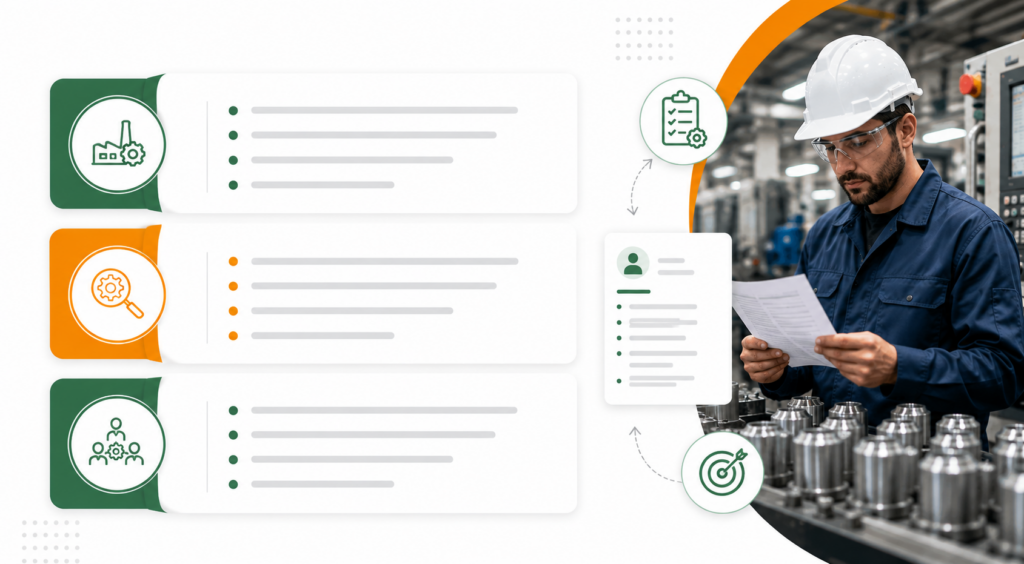
The most common mistake is writing something vague like worked in a manufacturing facility. A stronger bullet follows a simple structure:
| Weak: Worked in a manufacturing facility. Stronger: Operated CNC milling machines on a high-volume automotive parts line, producing an average of 400 units per shift while maintaining a defect rate under 1%. |
| Weak: Performed quality checks on products. Stronger: Inspected finished electronics components against ISO specifications, identifying an average of 30 defects per week and reducing rework time by 15% through improved sorting procedures. |
| Weak: Helped with production. Stronger: Assembled subcomponents on a consumer appliance production line, consistently meeting output targets while training two new hires on standard assembly procedures. |
Since many manufacturers screen applications through applicant tracking systems before a person ever reads them, it also helps to mirror the exact terms from the job posting rather than paraphrasing them. Starting from an ATS-friendly resume template helps make sure that language actually gets parsed correctly instead of getting lost in formatting.
Manufacturing Experience Examples for Different Careers
- Entry-level manufacturing worker: Emphasize reliability, willingness to learn equipment, and any safety training completed.
- Machine operator: Name the specific machines and materials you’ve worked with, and quote any production or accuracy metrics.
- Quality inspector: Highlight inspection methods, standards you worked against, and defect reduction results.
- Manufacturing engineer: Focus on process design, tooling improvements, and measurable efficiency gains.
- Maintenance technician: Detail the equipment types you service and your average response or downtime metrics.
- Production supervisor: Show scope — team size, shift output, and safety record.
- Warehouse worker transitioning into manufacturing: Lead with any overlap you have (material handling near a production line, forklift certification) and be upfront that you’re pivoting.
If you’re coming from a hands-on trade rather than a traditional factory floor, construction resume examples show how to translate physical, process-driven work into language hiring managers recognize, which applies well to manufacturing transitions too.
Manufacturing Experience vs. Production Experience
These terms are used almost interchangeably, and in most job postings, they mean the same thing. Production experience tends to emphasize the act of making or assembling a specific product, while manufacturing experience is the broader industry term that also includes engineering, maintenance, and quality roles. When in doubt, match the specific term the job posting uses in your resume and cover letter.
How Much Manufacturing Experience Do Employers Usually Want?
This varies by role and employer, but postings tend to phrase it a few common ways:
- 1 year of manufacturing experience usually signals an entry-to-mid-level production role.
- 2+ years of manufacturing experience typically applies to machine operator, quality inspector, or lead roles.
- Previous production experience preferred is often flexible; strong transferable skills can make up for a shorter track record.
- Manufacturing environment required is usually about comfort with plant conditions (noise, PPE, shift work) more than a specific skill.
Compare the exact wording against your own resume rather than guessing. It’s also worth knowing the demand side is in your favor: manufacturers project needing as many as 3.8 million workers over the next decade as the sector grows and an aging workforce retires, and many employers are adjusting requirements to fill roles rather than holding out for a perfect match.
Conclusion
Manufacturing experience can come from more roles than you may realize, from assembly and machine operation to quality control, maintenance, and production supervision. The key is to identify the experience and skills that match the job you want, then describe them clearly on your resume.
Review your past work, highlight relevant manufacturing skills, and update your resume with specific responsibilities, equipment, processes, and results. When you’re ready to apply, use a clear, ATS-friendly resume that puts your relevant experience where employers can find it quickly.
Frequently Asked Questions
What is considered manufacturing experience?
Any hands-on or supervisory work involved in producing, assembling, inspecting, or maintaining products in a factory, plant, or similar production environment.
Does warehouse experience count as manufacturing experience?
Usually not on its own, since general warehouse work doesn’t involve transforming materials into a product. It can count if the role was inside a production facility and directly supported manufacturing.
How do I list manufacturing experience on my resume?
Use a specific structure: role, environment, responsibility, equipment or process, and a measurable outcome. Avoid vague statements like “worked in a factory.”
What skills do manufacturing employers look for?
Commonly requested skills include machine operation, quality inspection, safety compliance, Lean or Six Sigma methods, equipment maintenance, and production scheduling.
Can I get a manufacturing job without previous manufacturing experience?
Often, yes, especially for entry-level roles. Employers frequently value mechanical aptitude, reliability, and safety awareness over a long manufacturing résumé.
- What Counts as Manufacturing Experience?
- Production and Assembly
- Machine Operation
- Quality Control and Inspection
- Manufacturing and Process Engineering
- Maintenance and Equipment Repair
- Production Supervision
- Packaging and Processing
- Material Handling Within Production
- Safety and Compliance
- Process Improvement and Lean Manufacturing
- Examples of Manufacturing Experience
- Does Your Experience Count as Manufacturing Experience?
- Warehouse experience
- Assembly experience
- Machine operation
- Quality control
- Engineering experience
- Retail or general labor experience
- What Skills Are Considered Manufacturing Skills?
- Technical skills:
- Operational and workplace skills:
- How to Describe Manufacturing Experience on a Resume
- Manufacturing Experience Examples for Different Careers
- Manufacturing Experience vs. Production Experience
- How Much Manufacturing Experience Do Employers Usually Want?
- Conclusion
- Frequently Asked Questions
- What is considered manufacturing experience?
- Does warehouse experience count as manufacturing experience?
- How do I list manufacturing experience on my resume?
- What skills do manufacturing employers look for?
- Can I get a manufacturing job without previous manufacturing experience?